27 March 2013

Sylvia Plath: Children's Author (via @brainpickings)

This is awesome and somewhat totally mindblowing.  Via Brain Pickings:

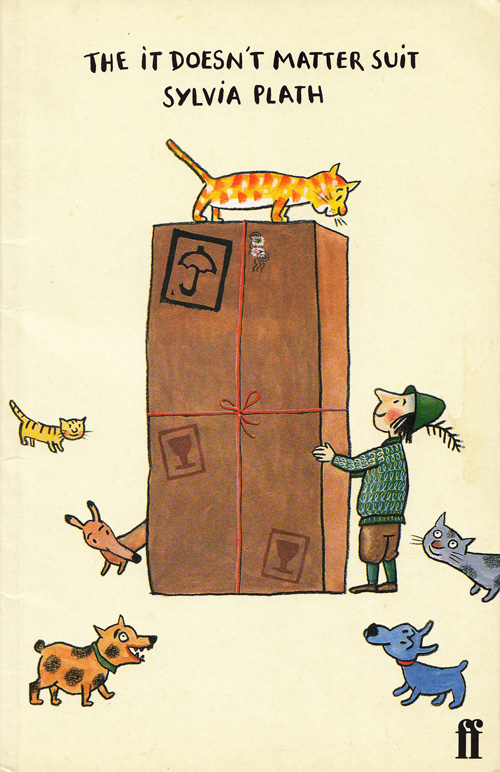
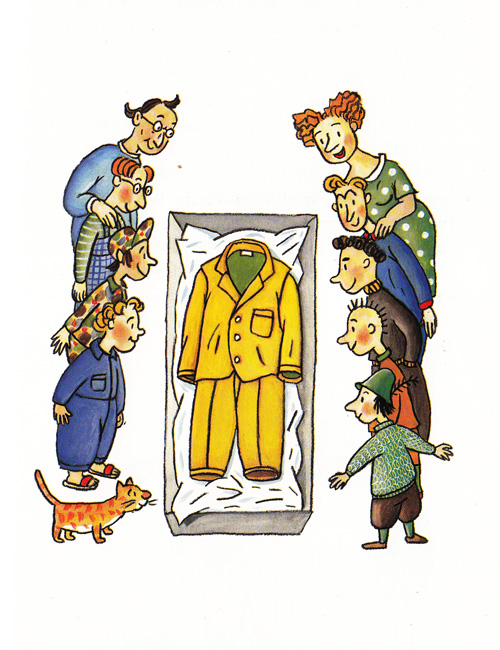
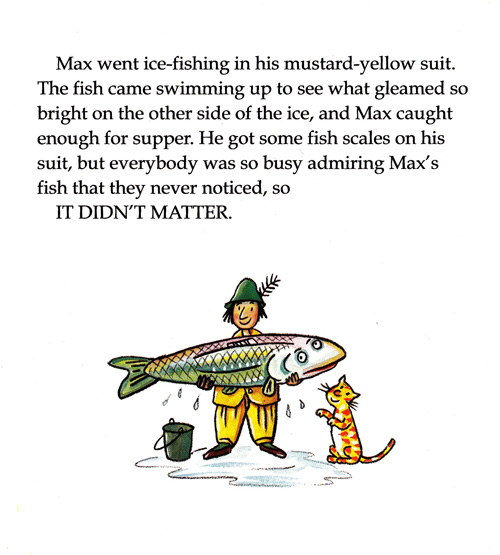
"Sylvia Plath — celebrated poet, little-known artistlover of the worldrepressed “addict of experience”steamy romancer … and children’s book author? Given my soft spot for lesser-known vintage children’s books by famous literary icons, I was delighted to discover The It-Doesn’t-Matter Suit (public library) — a charming children’s story Plath penned shortly before having her first child. Though her journals indicate it was written on or immediately before September 26, 1959, it wasn’t until March of 1996 that the tale saw light of day with its first — and only — publication, featuring wonderful illustrations by German graphic designer and artist Rotraut Susanne Berner."


19 March 2013

Guest Post @BookRiot: Metafictional Children's Literature


Here's another guest post at Book Riot on my soft spot for metafictional children's literature:

Whether it’s the overlapping narratives of Cloud Atlas, the intricate puzzle of a Calvino novella, or the cheap thrills of The Matrix, I am a sucker for mind-bending entertainment—particularly stories from that curious subset called metafiction.
Describe a book as labyrinthine and I’m a goner. Tell me that a story resembles Russian nesting dolls and I’m putty in your hands.  Break down the fourth wall and I’ll be on the other side waiting for you with open arms and a cup of coffee.

 (Read the full post HERE at BookRiot.)

George Saunders on children's books


"Your instincts as parents are correct: a minute spent reading to your kids now will repay itself a million-fold later, not only because they love you for reading to them, but also because, years later, when they’re miles away, those quiet evenings, when you were tucked in with them, everything quiet but the sound of the page-turns, will, seem to you, I promise, sacred." 

— George Saunders


Just when I thought it wasn't possible to be any more in love with George Saunders, I stumbled upon this list of his recommended children's books that ended with the quote above.  Man-crush, you have been upgraded to threat level: Swoon.  (Read his recommendations here at Dinner a Love Story)

09 March 2013

Through the Pulp-o-mizer and In the Night Kitchen

Yesterday's favorite internet discovery was the Pulp-o-mizer, a customizable pulp magazine generator.  It's way too easy and way too much fun.  

I've had Sendak on the brain lately, so I took the pulp-o-mizer for a trial run with In the Night Kitchen:


07 March 2013

The Beasts of Childhood: Maurice Sendak in the Southern Wild (guest blogging @BookRiot)


I wrote a piece for Book Riot looking at the similarities between "Beasts of the Southen Wild" and "Where the Wild Things Are".  There will be a (still) hot bowl of soup waiting for you at the end of the post. [Click here for the full post.

27 February 2013

That is my belt: The next Jon Klassen hit?


Looks the Caldecott hasn't left Jon Klassen complacent.  Is this a preview of his next book?

Who knows... but don't be surprised if in the next year you see "I want my belt back" or "That is my belt" in a bookstore near you.

24 February 2013

Going Medieval: When Library Fines Aren't Enough

In Stephen Greenblatt's Pulitzer Prize winning "The Swerve", he goes into fascinating detail about the value of books, particularly prior to the advent of the printing press. In one passage, he describes how monasteries would sometimes protect these precious items by placing curses on them.

Reading one of these I couldn't help but think there might be some librarians who would be tempted to put this to use.  So, in case the 10 cent daily fine isn't doing the trick, I've made the curse into a handy sign:


Warning: Before posting this at your circulation desk, please check to make sure your library doesn't have a policy prohibiting eternal damnation.

13 February 2013

Cover to Cover, Shore to Shore (more U.S. vs. U.K. book covers)

As someone who could spend (and has spent) hours looking at book design, I love The Millions' annual comparison of U.S. vs. U.K. book covers.  Inspired by the post, here are the U.S. covers of some of the past Newbery Award winners and their alternate covers from across the pond.  


U.S. versus U.K. Book Covers
(U.S. left, U.K. right)

The U.S. version is both playful and mysterious. The U.K. version is a Brendan Fraser movie.
Winner: U.S.

The U.K. version is more stylish and less blatantly angtsy.
Winner: U.K.

Wasn't a big fan of either... and then I noticed the silhouette on the U.S. version.
Winner: U.S.

Both get the job done, but the U.S. version has more charm.
Winner: U.S.

Eh, both kind of look like album covers for discarded Pink Floyd albums.
Winner: None

The U.S. version is a bit cartoonish, but at least it doesn't make me want to cry.
Winner: Daisy from Downton Abbey

Full disclosure: I grew up subconsiously thinking the bearded old man was Lois Lowry.
Winner: U.S.

The U.S. version focuses on "plain", the U.K. focuses on "tall".
Winner: U.S. (This one is a pure nostalgia choice.  Sorry, U.K.)

Final Score
U.S.: 5
U.K.: 1
None: 2

11 February 2013

09 February 2013

Artist Exchange: A Chair for Whistler's Mother

In 1969, the great surrealist Salvador Dali published illustrations for Alice in Wonderland that were fantastic--if also slightly disturbing.

Advice from a Caterpillar
Seeing Dali's unique take on a beloved text makes you wonder: Which other classic artists would have be well-matched with books from the children's literature canon?

Here are three examples to start:


Author: Munro Leaf
Illustrator: Francisco Goya


Author: Vera B. Willams
Illustrator: James M. Whistler


Author: Jon Klassen
Illustrator: Renee Magritte


05 February 2013

Willems Shakespeare presents: Hamlet (starring the Pigeon)

Two of literature's most tortured characters, together at last.

WILLEMS SHAKESPEARE
presents:

HAMLET
(starring the Pigeon)


04 February 2013

That cat really did love his hats.


As editor in chief of Beginner Books at Random House in the late 1960s, Michael Frith worked closely with Geisel, sometimes into the early hours of the morning. When they were stumped by a word choice, Mr. Frith said, Geisel would often bound to the closet and grab a hat for each of them — a sombrero, or perhaps a fez. There they would be, sitting on the floor, Mr. Frith remembered, “two grown men in stupid hats trying to come up with the right word for a book that had only 50 words in it at most.”

My favorite detail is that he apparently had a secret hat closet hidden behind a bookcase.  Imagine trying to pull a copy of "Oh the Places You'll Go" from the shelf only to have the bookcase open up, revealing a secret closet--and instead of finding some deep dark secret, you find a room filled with hundreds upon hundreds of goofy hats?

31 January 2013

More post-caldecott discussion


Lolly Robinson over at The Horn Book put up a blogpost (Ethics, food chains, and stolen hats) to discuss my last post on "This is Not My Hat".  It's fun to see the pros weigh in. 

Also, for the record, my apparently jaded mind never even considered the fact that the little fish might have been spared--or as one of the commenters suggested, playing an elaborate game of hat-stealing tag.


29 January 2013

'This is Not My Hat': Reading (a little) too much into the 2013 Caldecott winner


Posted today on Page Views:
This year’s Caldecott Medal, awarded to the most distinguished picture book of the year, went to Jon Klassen’s “This is Not My Hat.” Klassen’s irreverent tale of deception and revenge is the 75th recipient of the distinguished award. Looking back over the past 75 years is like opening up a series of time capsules, with each year’s award revealing something about the mindset of that era.  
For example, 2011’s winner, “A Sick Day for Amos McGee” by Phil and Erin Stead, is a gentle story about a man who falls ill and relies on the kindness of his animal friends to nurse him back to health — a timely topic given the raging national debate as the U.S. made a push toward universal healthcare.  (Perhaps it was a preexisting condition that prevented Amos from accessing comprehensive health coverage.)
In 2004, the award was given to “The Man Who Walked Between the Towers” by Mordicai Gerstein.  The book is about a daredevil who walks a tightrope between the two towers of the World Trade Center and aptly captured the lingering tensions that still held post-9/11 America in its grip.  
And who could forget Sorche Nic Leodhas and Nonny Hogrogian’s “Always Room for One More” which in 1966 so presciently described the population growth scare that would explode two years later with the bestselling “The Population Bomb”?
Of course I’m being a bit facetious (though I did stop short of drawing parallels between the decline of World War II and “Make Way for Ducklings”), but there is something to be said about the cultural significance of a book that captures a country’s imagination.

25 January 2013

NPR on the Benefits of Reading


"The take-home lessons for parents are relatively modest: consider some Omega-3 supplements and sit down with your toddler and a good book for some interactive reading."

Read more at NPR

04 January 2013

Nerds and neanderthals, playoff edition: A literary guide to the 2012-13 NFL postseason


Orginally posted at Page Views:


In the preseason, we brought books into the locker room by identifying literary parallels for the 2012 NFL season. As the weeks rolled by, each unforeseen twist revealed a new storyline and unexpected characters emerged from the sidelines to assume pivotal roles in this final chapter of the season. With the regular season in the books and the playoffs about to start, now is the perfect time to reevaluate. So, as these modern-day gladiators take to the field (and the rest of us plop down on our couches), here is another literary guide to help prepare you for playoff action.

AFC Playoff Teams (in order of seeding):

1. Denver: The Peyton Manning gambit has worked out better than anyone could have expected. However, some wonder if the Broncos' success is largely illusory and mostly the result of a weak schedule. Are the Broncos capable of closing the deal on this miracle season or are they really just chasing a mirage through a desert of mediocrity?
Literary Equivalent: "A Hologram for the King" (Dave Eggers)

2. New England: It used to be assumed that Tom Brady and Bill Belichick could do no wrong come playoff time. While their powers remain strong, the veneer of invincibility has slowly worn off. As year after year they fall short of a championship, even the most diehard fans have been forced to accept their heroes’ flawed humanity.
Literary Equivalent: “Twilight of the Superheroes” (Deborah Eisenberg)


02 November 2012

A Man of Many Designs: The Illustrated Odyssey


Reimagining a classic is always a dangerous proposition.Author Gillian Cross and illustrator Neil Packer recently took on the Olympian task of packaging "The Odyssey" for a younger audience, presumably to serve as a placeholder until they encounter Homer in sophomore year of high school. To be clear, no one, including Cross and Packer, intends this to serve as a replacement for the original.However, this version does succeed as an appealing introduction for the uninitiated – and for the rest of us, it provides a welcome opportunity to view an old friend in a new light. (Click here to read the rest of the review at Page Views)

10 September 2012

Be Still My Nerdy Heart

A beautiful infographic by Jan Avendano capturing all the relationships in the Phantom Tollbooth.


Books about books: 'Mr. Morris Lessmore' and the enduring importance of print


Having been perched atop the bestseller lists, "The Fantastic Flying Books of Mr. Morris Lessmore" is William Joyce's love note to books and tugs at the heartstrings of bibilophiles everywhere.  Which is ironic because "Morris Lessmore" is actually based on an Oscar-winning computer-animated film that was then converted into an iPad app before finally making its way to the printed page.
Despite its origins in modern technology, "Morris Lessmore" is a welcome addition to an increasing number of books about the importance of books. As the picture book world evolves and adapts to new technologies (most prominent picture books have YouTube trailers and tie-in apps these days), authors are taking the time to remind us that despite the sparkle and swipe of the newest app, there will always be a need for the unique pleasures of print.  (Read the rest at PageViews)

07 September 2012

Nerds and Neanderthals


America makes a clear distinction between bookish types and football types. The Nerd vs. Neanderthal dichotomy is a cornerstone of American culture (at least in American culture as presented in high school TV shows).  
But the truth is that football and literature do not occupy separate realms. As any fan knows, football is driven by drama of the game. Each week’s contests are served up with a mythological importance: Epic battles between the forces of good and evil; tales of impossible redemption colliding with heartbreaking falls from grace; traitors conspiring in the shadows of egomaniacal tyrants. And all of that is just on the New York Jets. 
So to help you make sense of this upcoming season, here is a literary guide to the 2012 NFL season, wherein we identify some of the most compelling storylines and narratives from each team and its literary equivalent.  While only one team’s season will have a truly happy ending  —every team will emerge with a few good stories to tell.  (Read more here at Page Views)

23 May 2012

The True Value of the Little Prince Discovery


“Anything essential is invisible to the eyes.” –“The Little Prince”

Today (May 16), the Paris auction house Artcurial will auction off two recently discovered pages of Antoine de Saint-Exupéry’s beloved classic “Le Petit Prince.”

The auction house estimated the worth of this literary find between 40,000€ to 50,000€ (app. $52,000 to $65,000). This may seem like a high price tag for two thin pages of nearly illegible writing, but it would not be surprising to see it fetch an even greater sum.

After all, “The Little Prince” has sold 140 million copies worldwide and is the world’s second most translated book behind the Bible.

 But more interesting than the monetary value is this question: Why was this passage left out of the final manuscript? While we’ll probably never know the answer for sure, the omission of this particular passage sheds some light on the book’s breathtaking success. Read more at Page Views

14 May 2012

Beyond the cliché: Ten picture book gifts for graduates


Graduation season is fast upon us. It's likely that your local bookstore (if you’re lucky enough to still have a local bookstore), has already dusted off its “Gifts for the Graduate” display.
These will always feature picture books because, with their uplifting messages and a small word count, they make great gifts for the pomp and circumstance crowd.
However, it is important to choose carefully. Give the right picture book and you arm your graduate with precious wisdom for the road ahead. Choose poorly and you just dropped good money on a long-form greeting card.
Bookstores will inevitably suggest the classic (Dr. Seuss’s “Oh, the Places You’ll Go!”) and the cloying (Sandra Boynton’s “Yay You! Moving Out, Moving Up, Moving On”), but if you want to reach beyond the cliché, here are 10 alternative gift ideas: Read more at Page Views

10 May 2012

Some thoughts on Sendak


Some thoughts on Maurice Sendak in the NYDailyNews:
Sendak, who died on Tuesday at 83, knew that he was a writer unlike any other. “I think what I offered was different,” he once said in an interview, “but not because I drew better than anybody or wrote better than anybody, but because I was more honest than anybody.” Read more at the NYDailyNews

21 April 2012

The Pulitzer Board's Word Problem


Since the Pulitzer Board won't tell you what you should read, here are some suggestions: The Pulitzer Board's Word Problem
The Pulitzer committee caused quite a stir this week by deciding not to award a proize for fiction in 2012. But if you look closely at the three finalists (Denis Johnson's "Train Dreams," Karen Russell's "Swamplandia!" and David Foster Wallace's "The Pale King"), you'll see that they all have one thing in common that virtually disqualified them from winning anything this year: Too many words.

20 April 2012

Moving, kinda.


Moving to the more elegant web address: www.bottomshelfbooks.net.

(Note: Also, switched to a new template which may mess up the formatting for old posts.)

07 April 2012

Back in the saddle again?


It's been almost 2 years, but I've started writing again. I still have a lot of rust to knock off, but so far I've contributed 2 short pieces to Page Views, the new NY Daily News book blog:

"To help new parents get started in the brave new world of children’s literature, here are some complementary book pairings: a “grown-up” book and its picture book counterpart. These pairings offer a bridge between reading worlds by featuring recognizable characters, similar styles, and parallel themes. And most importantly, none of these pairs feature any (overt) messages about the joys of pooping."
"Dartmouth College announced this morning that its medical school will be named after Audrey and Theodor Geisel (aka Dr. Seuss, who graduated from there in 1925).
Since it does not inspire confidence to have a doctor who refers to body parts as "Thing 1" and "Thing 2", we thought it would be useful to prepare a new recommended reading list for incoming medical students."
I've missed writing, so hopefully this will help me get back on track. If not, I'll be sure to post again in another 2 years.

08 April 2010

BSB Flashback: Hop on Pop


9 April 2007

Author/Illustrator: Dr. Seuss

Many point to Bruno Bettelheim's award winning book, The Uses of Enchantment: The Meaning and Importance of Fairy Tales, as the moment that Freudian psychoanalysis officially came in contact with the realm of children's literature. While it is true that Bettleheim may have been one of the first academics to tackle the subject, it was the seminal work of Theodore Geisel (Dr. Seuss) that introduced children to Freud for the first time. Case in point: his playful exploration of the Oedipal complex: Hop on Pop.

Hop on Pop was published in 1963, a full 13 years before Bettelheim's Enchantment, and decades before Freud was widely dismissed by the psychological community as a coked-up sex fiend. Pop can be read as a thinly veiled introduction to the disturbing psychosexual theory that the father is the enemy who is preventing us from realizing some deeply ingrained sexual need for our mothers. Gross! Luckily, Seuss didn't get too caught up in the raging Sigmundsteria of the times, otherwise he may have been tempted to go all-out Oedipal and written his book as Hop on Pop then Marry Mommy, which probably would have tarnished his otherwise untouchable legacy.

Upon closer inspection, Freud and other psychological influences can be found sprinkled throughout Seuss's work. The Cat in the Hat is nothing more than a hyperkinetic romp through the subconscious with the Id, Ego, and Superego. The entire plot of Green Eggs and Ham is driven by Freud's theories of the repression and sublimation of base impulses. (What else could "Sam I Am" be, other than an anal-retentive individual's guilt-ridden projection of the repressed self and its latent desires?) And Horton Hears a Who? Horton hears a psychiatrist diagnosing him with schizophrenia, that's who he hears. In fact, if you read too closely, Seussville runs the risk of becoming an inescapable labyrinth of Freudian slips and slides... so maybe we're better off reading with eyes wide shut.