21 April 2013

A Great Gatsby/Arrested Development Mash-up (@BookRiot)

I wrote another post for Book Riot last week: 


Two of the year’s most highly anticipated events are the The Great Gatsby movie and the return of Arrested Development. To fill the void until their release dates, let’s see what happens when the Great American Novel meets the Great American Family. 

Click here for the full piece at BookRiot, but for a taste, here are a few one of my favorites:


Some links:

16 April 2013

You're by no means alone

“Among other things, you'll find that you're not the first person who was ever confused and frightened and even sickened by human behavior. You're by no means alone on that score, you'll be excited and stimulated to know. Many, many men have been just as troubled morally and spiritually as you are right now. Happily, some of them kept records of their troubles. You'll learn from them—if you want to. Just as someday, if you have something to offer, someone will learn something from you. It's a beautiful reciprocal arrangement. And it isn't education. It's history. It's poetry.”

J. D. Salinger, Catcher in the Rye

06 April 2013

March Madness, by the book (@NYDNBooks)

I just wrote another sports related post for Page Views, this time about the Final Four: 
It's that time of year again when I find myself brooding over the smoking wreckage that is my NCAA tournament bracket, wondering where it all went wrong. 
And inevitably, there's someone out there who filled out their bracket based on some random criteria (uniform color, mascot fierceness, campus with the best food courts french fries), and I can only watch in horror as they dance their way to victory.   
So as we head into the Final Four, I'm taking this time to reevaluate the field based on an equally random factor: the literary connections of the remaining schools. 
Maybe this will provide clarity in the face of the madness — and perhaps next time I'll head to the library instead of the sports page before making my picks. I definitely can't fare any worse than I did this year.
[Click here for full text]

02 April 2013

Instagram for Books (New Post @BookRiot)

Through the magic of Instagram, the average person with a cellphone camera can take a normal picture and add depth, grit, and even a sense of made-to-order nostalgia. Now imagine an app that would let you apply this same capability to literature. Something that would allow you to–with just a few swipes on your smartphone–take a pedestrian piece of prose and instantly transform it into something more memorable.
For example, let’s take “The Hunger Games.” Its popularity is unquestioned, but it was not particularly renowned for the complexity or beauty of its language. What if we could take a passage from this book and apply some preset filters to approximate a more classic style?

"Best Books We Read In March" (@BookRiot)

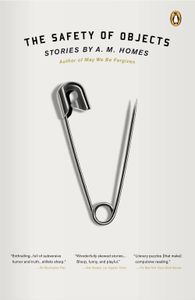
Book Riot asked contributors to choose the best book we read this month.  My choice was A. M. Homes' "The Safety of Objects", but you should go check out the full post--lots of good stuff there.

[Click here for full post]

safety of objects a.m. homes
The Safety of Objects by A. M. Homes
I often hear great writers described as surgeons, but I think of A.M. Homes more as a dentist (and I mean that in the best possible way). In her 1990 collection, The Safety of Objects, she explores the quiet desperation of suburbia, shining a blinding and unflattering light right in your face as she pokes, prods, and excavates with her sharp and sinister tools. She also (like my dentist, at least) uses humor to temper the discomfort–and that’s when she busts out the drill. These stories are uncomfortable but necessary, and leave you disoriented, numb, and desperate for a lollipop.

(Important Tip: DO NOT read the back cover. It commits the cardinal sin of revealing just a bit too much and diffuses some of the suspense.)

27 March 2013

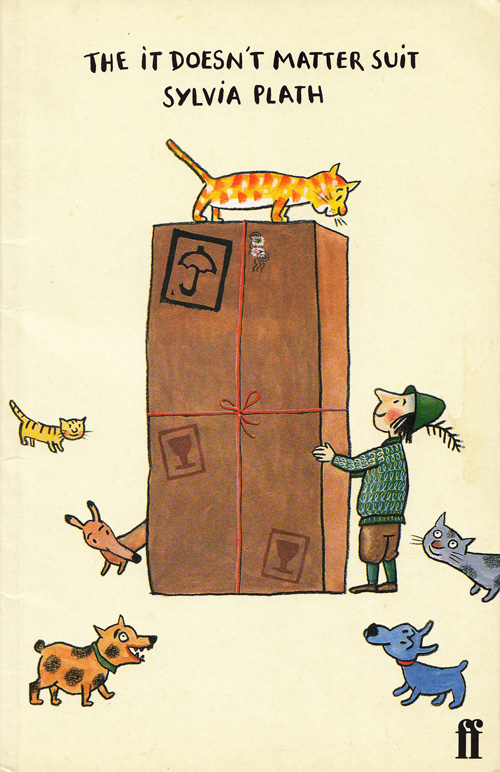
Sylvia Plath: Children's Author (via @brainpickings)

This is awesome and somewhat totally mindblowing.  Via Brain Pickings:

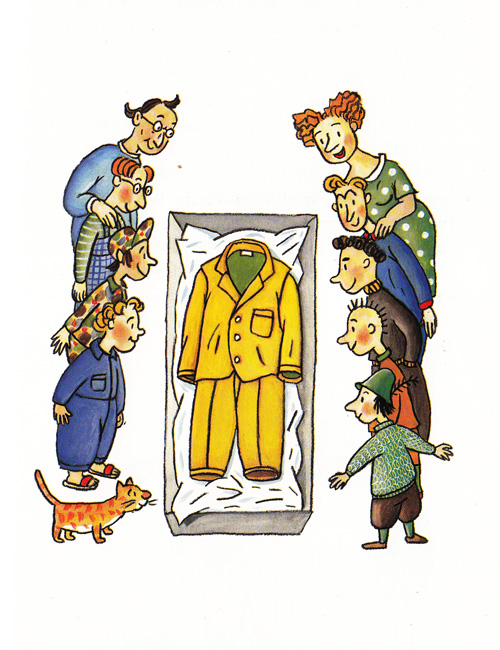
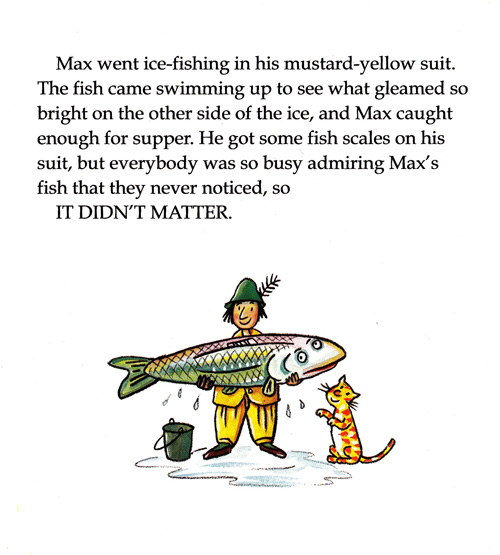
"Sylvia Plath — celebrated poet, little-known artist, lover of the world, repressed “addict of experience”, steamy romancer … and children’s book author? Given my soft spot for lesser-known vintage children’s books by famous literary icons, I was delighted to discover The It-Doesn’t-Matter Suit (public library) — a charming children’s story Plath penned shortly before having her first child. Though her journals indicate it was written on or immediately before September 26, 1959, it wasn’t until March of 1996 that the tale saw light of day with its first — and only — publication, featuring wonderful illustrations by German graphic designer and artist Rotraut Susanne Berner."


19 March 2013

Guest Post @BookRiot: Metafictional Children's Literature


Here's another guest post at Book Riot on my soft spot for metafictional children's literature:

Whether it’s the overlapping narratives of Cloud Atlas, the intricate puzzle of a Calvino novella, or the cheap thrills of The Matrix, I am a sucker for mind-bending entertainment—particularly stories from that curious subset called metafiction.
Describe a book as labyrinthine and I’m a goner. Tell me that a story resembles Russian nesting dolls and I’m putty in your hands.  Break down the fourth wall and I’ll be on the other side waiting for you with open arms and a cup of coffee.

 (Read the full post HERE at BookRiot.)

George Saunders on children's books


"Your instincts as parents are correct: a minute spent reading to your kids now will repay itself a million-fold later, not only because they love you for reading to them, but also because, years later, when they’re miles away, those quiet evenings, when you were tucked in with them, everything quiet but the sound of the page-turns, will, seem to you, I promise, sacred." 

— George Saunders


Just when I thought it wasn't possible to be any more in love with George Saunders, I stumbled upon this list of his recommended children's books that ended with the quote above.  Man-crush, you have been upgraded to threat level: Swoon.  (Read his recommendations here at Dinner a Love Story)

09 March 2013

Through the Pulp-o-mizer and In the Night Kitchen

Yesterday's favorite internet discovery was the Pulp-o-mizer, a customizable pulp magazine generator.  It's way too easy and way too much fun.  

I've had Sendak on the brain lately, so I took the pulp-o-mizer for a trial run with In the Night Kitchen:


07 March 2013

The Beasts of Childhood: Maurice Sendak in the Southern Wild (guest blogging @BookRiot)


I wrote a piece for Book Riot looking at the similarities between "Beasts of the Southen Wild" and "Where the Wild Things Are".  There will be a (still) hot bowl of soup waiting for you at the end of the post. [Click here for the full post.] 

27 February 2013

That is my belt: The next Jon Klassen hit?


Looks the Caldecott hasn't left Jon Klassen complacent.  Is this a preview of his next book?

Who knows... but don't be surprised if in the next year you see "I want my belt back" or "That is my belt" in a bookstore near you.

24 February 2013

Going Medieval: When Library Fines Aren't Enough

In Stephen Greenblatt's Pulitzer Prize winning "The Swerve", he goes into fascinating detail about the value of books, particularly prior to the advent of the printing press. In one passage, he describes how monasteries would sometimes protect these precious items by placing curses on them.

Reading one of these I couldn't help but think there might be some librarians who would be tempted to put this to use.  So, in case the 10 cent daily fine isn't doing the trick, I've made the curse into a handy sign:


Warning: Before posting this at your circulation desk, please check to make sure your library doesn't have a policy prohibiting eternal damnation.

13 February 2013

Cover to Cover, Shore to Shore (more U.S. vs. U.K. book covers)

As someone who could spend (and has spent) hours looking at book design, I love The Millions' annual comparison of U.S. vs. U.K. book covers.  Inspired by the post, here are the U.S. covers of some of the past Newbery Award winners and their alternate covers from across the pond.  


U.S. versus U.K. Book Covers
(U.S. left, U.K. right)

The U.S. version is both playful and mysterious. The U.K. version is a Brendan Fraser movie.
Winner: U.S.

The U.K. version is more stylish and less blatantly angtsy.
Winner: U.K.

Wasn't a big fan of either... and then I noticed the silhouette on the U.S. version.
Winner: U.S.

Both get the job done, but the U.S. version has more charm.
Winner: U.S.

Eh, both kind of look like album covers for discarded Pink Floyd albums.
Winner: None

The U.S. version is a bit cartoonish, but at least it doesn't make me want to cry.
Winner: Daisy from Downton Abbey

Full disclosure: I grew up subconsiously thinking the bearded old man was Lois Lowry.
Winner: U.S.

The U.S. version focuses on "plain", the U.K. focuses on "tall".
Winner: U.S. (This one is a pure nostalgia choice.  Sorry, U.K.)

Final Score
U.S.: 5
U.K.: 1
None: 2

11 February 2013

09 February 2013

Artist Exchange: A Chair for Whistler's Mother

In 1969, the great surrealist Salvador Dali published illustrations for Alice in Wonderland that were fantastic--if also slightly disturbing.

Advice from a Caterpillar
Seeing Dali's unique take on a beloved text makes you wonder: Which other classic artists would have be well-matched with books from the children's literature canon?

Here are three examples to start:


Author: Munro Leaf
Illustrator: Francisco Goya


Author: Vera B. Willams
Illustrator: James M. Whistler


Author: Jon Klassen
Illustrator: Renee Magritte


05 February 2013

Willems Shakespeare presents: Hamlet (starring the Pigeon)

Two of literature's most tortured characters, together at last.

WILLEMS SHAKESPEARE
presents:

HAMLET
(starring the Pigeon)


04 February 2013

That cat really did love his hats.


As editor in chief of Beginner Books at Random House in the late 1960s, Michael Frith worked closely with Geisel, sometimes into the early hours of the morning. When they were stumped by a word choice, Mr. Frith said, Geisel would often bound to the closet and grab a hat for each of them — a sombrero, or perhaps a fez. There they would be, sitting on the floor, Mr. Frith remembered, “two grown men in stupid hats trying to come up with the right word for a book that had only 50 words in it at most.”

My favorite detail is that he apparently had a secret hat closet hidden behind a bookcase.  Imagine trying to pull a copy of "Oh the Places You'll Go" from the shelf only to have the bookcase open up, revealing a secret closet--and instead of finding some deep dark secret, you find a room filled with hundreds upon hundreds of goofy hats?

31 January 2013

More post-caldecott discussion


Lolly Robinson over at The Horn Book put up a blogpost (Ethics, food chains, and stolen hats) to discuss my last post on "This is Not My Hat".  It's fun to see the pros weigh in. 

Also, for the record, my apparently jaded mind never even considered the fact that the little fish might have been spared--or as one of the commenters suggested, playing an elaborate game of hat-stealing tag.


29 January 2013

'This is Not My Hat': Reading (a little) too much into the 2013 Caldecott winner


Posted today on Page Views:
This year’s Caldecott Medal, awarded to the most distinguished picture book of the year, went to Jon Klassen’s “This is Not My Hat.” Klassen’s irreverent tale of deception and revenge is the 75th recipient of the distinguished award. Looking back over the past 75 years is like opening up a series of time capsules, with each year’s award revealing something about the mindset of that era.  
For example, 2011’s winner, “A Sick Day for Amos McGee” by Phil and Erin Stead, is a gentle story about a man who falls ill and relies on the kindness of his animal friends to nurse him back to health — a timely topic given the raging national debate as the U.S. made a push toward universal healthcare.  (Perhaps it was a preexisting condition that prevented Amos from accessing comprehensive health coverage.)
In 2004, the award was given to “The Man Who Walked Between the Towers” by Mordicai Gerstein.  The book is about a daredevil who walks a tightrope between the two towers of the World Trade Center and aptly captured the lingering tensions that still held post-9/11 America in its grip.  
And who could forget Sorche Nic Leodhas and Nonny Hogrogian’s “Always Room for One More” which in 1966 so presciently described the population growth scare that would explode two years later with the bestselling “The Population Bomb”?
Of course I’m being a bit facetious (though I did stop short of drawing parallels between the decline of World War II and “Make Way for Ducklings”), but there is something to be said about the cultural significance of a book that captures a country’s imagination.

25 January 2013

NPR on the Benefits of Reading


"The take-home lessons for parents are relatively modest: consider some Omega-3 supplements and sit down with your toddler and a good book for some interactive reading."

Read more at NPR

04 January 2013

Nerds and neanderthals, playoff edition: A literary guide to the 2012-13 NFL postseason


Orginally posted at Page Views:


In the preseason, we brought books into the locker room by identifying literary parallels for the 2012 NFL season. As the weeks rolled by, each unforeseen twist revealed a new storyline and unexpected characters emerged from the sidelines to assume pivotal roles in this final chapter of the season. With the regular season in the books and the playoffs about to start, now is the perfect time to reevaluate. So, as these modern-day gladiators take to the field (and the rest of us plop down on our couches), here is another literary guide to help prepare you for playoff action.

AFC Playoff Teams (in order of seeding):

1. Denver: The Peyton Manning gambit has worked out better than anyone could have expected. However, some wonder if the Broncos' success is largely illusory and mostly the result of a weak schedule. Are the Broncos capable of closing the deal on this miracle season or are they really just chasing a mirage through a desert of mediocrity?
Literary Equivalent: "A Hologram for the King" (Dave Eggers)

2. New England: It used to be assumed that Tom Brady and Bill Belichick could do no wrong come playoff time. While their powers remain strong, the veneer of invincibility has slowly worn off. As year after year they fall short of a championship, even the most diehard fans have been forced to accept their heroes’ flawed humanity.
Literary Equivalent: “Twilight of the Superheroes” (Deborah Eisenberg)


02 November 2012

A Man of Many Designs: The Illustrated Odyssey


Reimagining a classic is always a dangerous proposition.Author Gillian Cross and illustrator Neil Packer recently took on the Olympian task of packaging "The Odyssey" for a younger audience, presumably to serve as a placeholder until they encounter Homer in sophomore year of high school. To be clear, no one, including Cross and Packer, intends this to serve as a replacement for the original.However, this version does succeed as an appealing introduction for the uninitiated – and for the rest of us, it provides a welcome opportunity to view an old friend in a new light. (Click here to read the rest of the review at Page Views)

10 September 2012

Be Still My Nerdy Heart

A beautiful infographic by Jan Avendano capturing all the relationships in the Phantom Tollbooth.


Books about books: 'Mr. Morris Lessmore' and the enduring importance of print


Having been perched atop the bestseller lists, "The Fantastic Flying Books of Mr. Morris Lessmore" is William Joyce's love note to books and tugs at the heartstrings of bibilophiles everywhere.  Which is ironic because "Morris Lessmore" is actually based on an Oscar-winning computer-animated film that was then converted into an iPad app before finally making its way to the printed page.
Despite its origins in modern technology, "Morris Lessmore" is a welcome addition to an increasing number of books about the importance of books. As the picture book world evolves and adapts to new technologies (most prominent picture books have YouTube trailers and tie-in apps these days), authors are taking the time to remind us that despite the sparkle and swipe of the newest app, there will always be a need for the unique pleasures of print.  (Read the rest at PageViews)

07 September 2012

Nerds and Neanderthals


America makes a clear distinction between bookish types and football types. The Nerd vs. Neanderthal dichotomy is a cornerstone of American culture (at least in American culture as presented in high school TV shows).  
But the truth is that football and literature do not occupy separate realms. As any fan knows, football is driven by drama of the game. Each week’s contests are served up with a mythological importance: Epic battles between the forces of good and evil; tales of impossible redemption colliding with heartbreaking falls from grace; traitors conspiring in the shadows of egomaniacal tyrants. And all of that is just on the New York Jets. 
So to help you make sense of this upcoming season, here is a literary guide to the 2012 NFL season, wherein we identify some of the most compelling storylines and narratives from each team and its literary equivalent.  While only one team’s season will have a truly happy ending  —every team will emerge with a few good stories to tell.  (Read more here at Page Views)